


Queensland Unveils Victoria Park Legacy Plan Built Around Year-Round Sport and Events
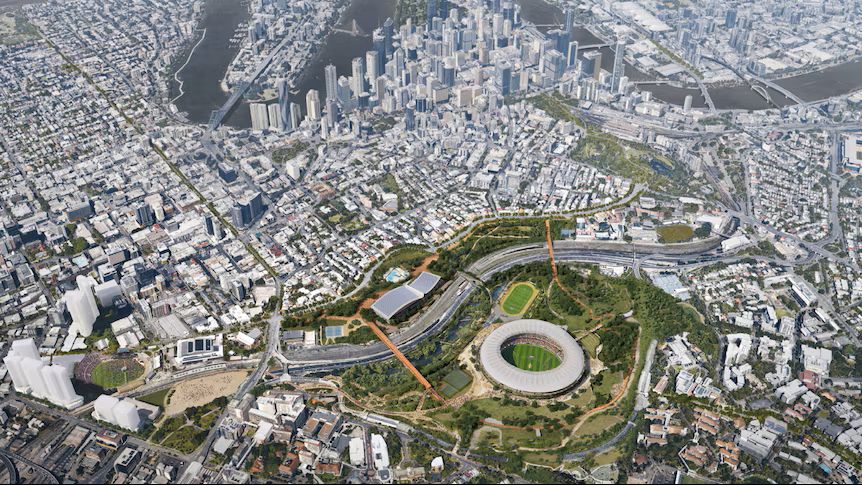
The Queensland Government has released its Victoria Park Precinct Draft Legacy Plan, establishing the most comprehensive framework to date for how Brisbane’s central 2032 Olympic and Paralympic venue cluster will operate as a year-round sport, entertainment, and urban development precinct.
Prepared by global engineering and advisory firm Arup, the draft blueprint connects the new Brisbane Stadium, National Aquatic Centre, Brisbane Showgrounds, Athletes Village, and surrounding parklands within a single long-term commercial strategy. Public consultation on the initiative is scheduled to open on Monday, August 3, and run until Sunday, September 27, 2026, marking a critical milestone in the region’s post-Games economic planning.
At the core of the strategy is the new Brisbane Stadium, which will replace the Gabba as the future home of the Brisbane Lions, Brisbane Heat, and Queensland Bulls, while also staging international cricket, major events, and large-scale concerts. With a capacity of up to 63,000 for sport and 70,000 for concerts, the venue will host the Opening and Closing Ceremonies, athletics, and Para athletics during the 2032 Games.
Emphasising the broader economic transformation of the city, Minister for Veterans, Premier David Crisafulli, compared the project’s long-term ambition to a historic regional milestone.
“Just as South Bank defined a city as the gift for Expo 88, Victoria Park will be the legacy of 2032,” Crisafulli said.
To ensure long-term commercial viability, the draft plan emphasises extensive activation outside the traditional sporting calendar through hospitality offerings, tourism experiences, and flexible public spaces designed to extend visitation and spending.
The National Aquatic Centre will similarly combine high-performance training facilities for swimming, diving, and water polo with community access by incorporating the heritage-listed Centenary Pool.
Furthermore, the Brisbane Showgrounds will undergo a major upgrade featuring a 20,000-seat Main Arena and the Athletes Village, which will accommodate over 10,000 athletes and officials before being converted into permanent inner-city housing post-Games.
While the precinct forms part of the jointly funded $7.1 billion 2032 Olympic and Paralympic Games Venues Infrastructure Program, the draft plan stops short of providing a precinct-wide budget or itemising venue-level capital expenditure.
Procurement for the Brisbane Stadium is advancing through the Games Independent Infrastructure and Coordination Authority, with pre-Games construction targeted for completion by 2031 following initial works that commenced in June 2026.
The final legacy plan is slated for release in 2027, setting the stage for sustainable commercial operations through 2042 and beyond.
Don’t miss out on the latest in sports business – Subscribe today to the free Ministry of Sport newsletter and stay ahead of the game. For even more exclusive insights, event tickets, professional development and networking events, become a MoS Member today!.
Latest News




Similar Stories
Proposed $500M+ Canberra Stadium Sparks Commercial Debate Over Multi-Code Utility
Plans for a state-of-the-art, 30,000-seat stadium on the north shore of Lake Burley...
Macarthur FC Proposes $20 Million Modular Stadium at Oran Park as Camden Council Weighs Infrastructure Options
A-League Men club Macarthur FC has submitted a proposal for a $20 million...
ICC Delays World Club Championship Plans Following Resistance from Cricket’s Big Three
The International Cricket Council (ICC) has shelved plans to introduce a World Club...
It's free to join the team!
Join the most engaged community in the Sports Business World.
Get all the latest news, insights, data, education and event updates.