


NRL Television Rights War
National Rugby League (NRL) Independent Commission Chairman Peter V’landys has emerged as the ultimate kingmaker of the Australian television sector, with upcoming broadcast rights negotiations poised to deliver a seismic recalibration of the nation’s sports business landscape.
The high-stakes negotiations, spearheaded by V’landys and outgoing Chief Executive Andrew Abdo, represent a critical strategic juncture. The outcome threatens to either dismantle Foxtel’s decades-long dominance over domestic pay television or decisively choke Nine Entertainment’s aggressive expansion as a major subscription streaming powerhouse.
Historically, industry observers ridiculed assertions that the NRL could eclipse the landmark $4.5 billion, seven-year broadcast arrangement secured by the AFL in 2022. However, an aggressive operational expansion towards a 20-team competition—yielding more premium content inventory weekly—coupled with unprecedented linear and streaming audience growth, has triggered a perfect commercial storm.
Domestic metrics illustrate the code’s soaring market equity. The recent grand final between Brisbane and Melbourne captivated an average audience of nearly 4.5 million viewers, marking the first time the NRL showpiece outpaced the AFL equivalent in a single year since 2015. Furthermore, the men’s State of Origin series opener attracted close to 4 million viewers—a 6 per cent surge year-on-year—while the women’s iteration consistently commands 1 million viewers, presenting a highly lucrative proposition for corporate partners.
The financial disparity under the current broadcast cycle is stark. The AFL’s 2022 deal averages roughly $640 million annually. By contrast, the NRL’s existing joint arrangement with Nine Entertainment and Foxtel, which expires at the conclusion of the 2027 season, yields approximately $400 million per annum.
With global tech giants like Netflix, Apple, and Amazon exhibiting limited appetite for localized leagues within a finite market of 25 million consumers, the valuation of the next NRL rights cycle hinges entirely on intense domestic competition. That tension is being driven by two heavily capitalised bidders executing diametrically opposed corporate strategies.
On one side sits Foxtel, recently acquired by global streaming titan DAZN in a $3.4 billion takeover bankrolled by Ukrainian-born billionaire Len Blavatnik. Boasting more than 4 million subscribers as it transitions from legacy cable to internet-delivered programming, DAZN is highly incentivised to protect its foundational asset.
Conversely, Nine Entertainment has positioned its streaming subsidiary, Stan, as a formidable sports challenger. Following its acquisition of Optus Sport and the English Premier League rights, Nine has heavily integrated Stan Sport, introducing an ad-supported tier to blur the lines between free-to-air and subscription television. This cross-spectrum framework is engineered precisely to satisfy the NRL’s dual requirements: guaranteed prime-time exposure on free-to-air alongside billions in subscription revenue.
The strategic ramifications are binary. Should V’landys award Nine Entertainment the exclusive consolidated rights suite, it would shut Foxtel out of rugby league for the first time since the Super League war of the 1990s. While a total buyout could cost upwards of three times Nine’s current $1.5 billion market capitalisation, it would solidify the conglomerate as the first unified free-to-air and pay-TV powerhouse in modern Australian history.
Conversely, opting for a Foxtel alliance paired with an alternative free-to-air partner, such as Seven West Media or Network Ten, would leave Nine completely starved of tier-one winter code content for the first time in over thirty years, severely destabilising one of the traditional pillars of Australian media.
With Southern Cross Media Group heavily motivated to partner with Foxtel to act as a commercial spoiler against Nine, the bidding war is expected to yield record-breaking figures. The television executives have made their priorities clear, and the financial trajectory of the sport now rests entirely on which network can offer the ultimate financial and promotional mix.
Don’t miss out on the latest in sports business – Subscribe today to the free Ministry of Sport newsletter and stay ahead of the game. For even more exclusive insights, event tickets, professional development and networking events, become a MoS Member today!.
Latest News


Similar Stories
CBS Sports CEO David Berson to Lead TNT Sports
The landscape of international sports broadcasting has experienced a corporate overhaul following...
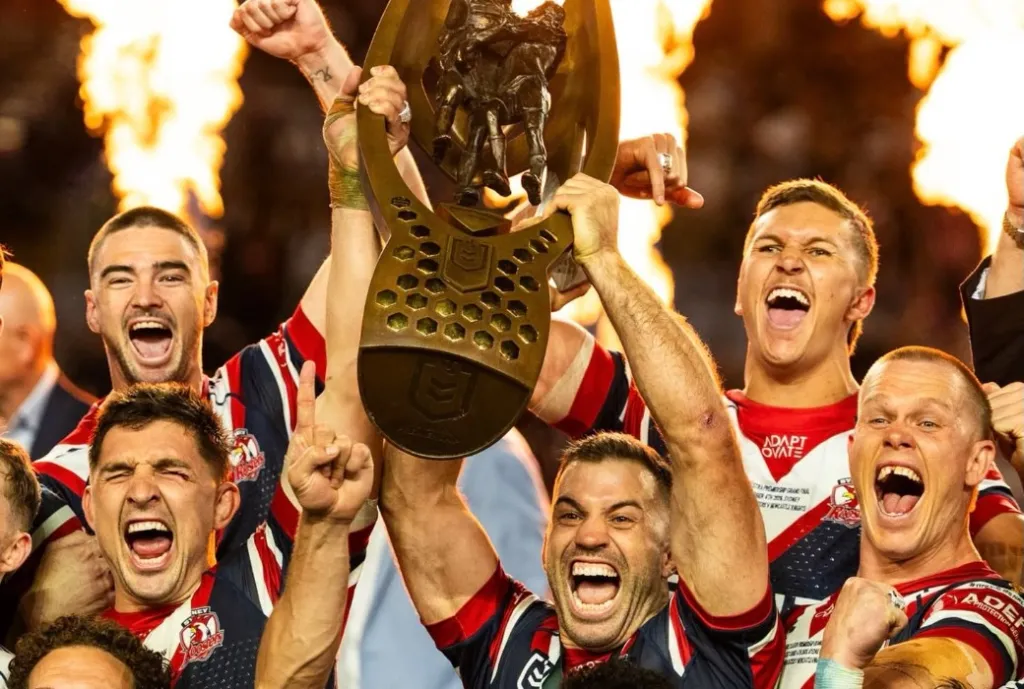
Sydney Roosters NRL Grand Final Triumph Delivers 4.29 Million Viewers for Nine Network
The Nine Network has reinforced its dominant position in Australian sports broadcasting, securing...
Nine Network Secures Seven-Year Broadcast Partnership with Australian Athletics
Australian Athletics has announced a seven-year broadcast partnership with the 9Network, establishing free-to-air...
It's free to join the team!
Join the most engaged community in the Sports Business World.
Get all the latest news, insights, data, education and event updates.